

6 Virtual Gym Class Ideas for Kids with ADHD
Health experts from the Center for Disease Control and Prevention (CDC) recommend that children get at least 60 minutes of exercise daily. How your child gets that exercise — dancing, swimming, bike riding, playing soccer, playing catch with a ball in the yard — doesn’t really matter.
There is also evidence that spending time outside in nature can calm some kids with ADHD. Even bundling up and playing in the snow or going for a winter hike counts as good exercise. However, between the cold winter months and busy schedules, getting outside to play isn’t always easy.
Below are six online workouts that allow your child to let out some pent-up energy. Bonus: some of them may feature your child’s favorite characters!
1. Minecraft Yoga with Cosmic Kids
2. The Very Hungry Caterpillar with Cosmic Kids
3. Mario Gym Class with Sweat Kids
4. Indoor Workout: Exercise in the Jungle
5. PopSugar Family Fitness Cardio
6. Frozen Dance with Sam Cam’s Dance Studio
Even with adequate exercise, unmanaged ADHD can impact your child’s home and school life. As a multidisciplinary practice, we can help children with ADHD (and their parents) take their next steps. Our holistic approach looks at all aspects of treatment from therapy, lifestyle modifications, medication management, and parent coaching.
If you would like to book an appointment with one of our professionals, give us a call at 502-907-5908 or fill out this form.
Learn More
Planning a Winter Getaway? Here Are 4 Packing Tips for Adults with ADHD
Planning a winter getaway? Whether you’re headed for a skiing trip up north or you’re headed south to soak up the sun on a warm beach, you’ll need to pack. Yet, packing can be a source of frustration for adults with ADHD.
Our multidisciplinary team knows that skills that require planning — one of the executive function skills — can be tricky, but we also know that like all skills, your planning skills can be strengthened.
In this blog, we take a look at the reasons why packing is so troublesome and what strategies can make packing for a vacation so much easier.
3 Reasons Packing is Hard for Adults with ADHD
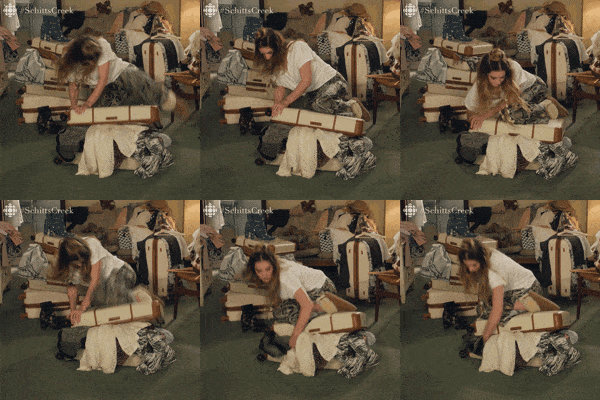
1. Packing Requires Planning
Planning is essential when it comes to packing, yet planning can be difficult for this with ADHD. Planning requires you to:
- Think about where you’re going and what specific activities you’ll be doing
- Consider any dress code requirements you’ll encounter
- Consider the weather at your destination
Even if you don’t enjoy planning, there are some steps you can take to make this part of vacationing more tolerable.
2. Packing Requires Decision-Making
Making decisions is hard for ADHD adults, and packing for a vacation is nothing more than making one decision after another.
- Should you bring one sweater or two?
- How many back-up pairs of socks do you need? Do I need specialize socks to ski or snowboard?
- Will the hotel have shampoo? Will that be enough?
- What if rains? Do you really need a rain coat?
- Did I pack enough?
- What if my good blouse gets stained?
- Do I need to bring a swimsuit?
- If I bring these pants, I need to pack my other shoes, right?
Not only is this overwhelming, but too many decisions all at once can lead to decision fatigue.
3. Packing Requires Organization
It’s no secret that organization is one of the biggest struggles for adults and teens with ADHD. Lack of organization can lead to many problems, including wrinkles clothes, misplaced train tickets, and so.much.stress.
4 Travel Packing Tips for Adults with ADHD
The good news is that these four tips can address all of the things you find so overwhelming with packing.
1. Make a list.
Before you even open your suitcase, make a list of everything you want to pack. Include a category for:
- Clothes
- Shoes
- Toiletries, such as contacts, contact solution, soap, sunscreen, etc.
- Electronic gear, including cameras, phones, tablets, and their chargers
- Snacks
- Tickets, reservation information, etc.
2. Plan outfits by the day.
Clothing can be an overwhelming part of the packing process. Did you pack too much? Not enough? The wrong attire all together?
Once you print out your packing list, plan your outfits by day. It might look something like this:
Saturday
- Travel day
- Joggers, sweatshirt, sneakers
Sunday
- Brunch in the morning: black wrap dress, wedge heels, white sweater
- Scuba tour in afternoon: swimsuit, sarong, flip flops
Monday
- Hiking in the morning: green hiking shorts, REI shirt, wool socks, hiking boots, sweatband, hiking backpack, water bottle, first aid kit
- Evening wine tasting: pink sun dress, wedge heels, white sweater
Once you start organizing your list this way, you’ll quickly identify if you’ve packed the right clothes for your itinerary — and if you can repeat any outfits or shoes.
3. Organize Your Suitcase

Once you’ve identified what clothes you need, pack your clothes in your suitcase. For some, using packing cubes helps organize your suitcase. Using packing cubes (or any other small pouch that holds only one day’s worth of clothes) makes it easier to search for what you need in your suitcase.
Winter clothes can be bulky. Consider using vacuum seals to help fit bulky items better.
4. Pack Light
More stuff means more to keep track of, and that can be overwhelming. Within reason, packing as light as possible can reduce some of those overwhelming feelings. For example, choose a pair of shoes to pack that matches the majority of your outfits. This can help you reduce the number of shoes you bring.
Other tips to pack light:
- Bring e-books instead of physical books
- Use paperless tickets when possible
Need More Help with Planning and Organizing?
Planning and organizing are essential when you’re packing for a vacation, but that’s not the only scenario where you rely on these skills. You also need planning and organization to:
- Plan projects at work
- Organize household events, chores, and family schedules
- Organize your workload in college
- Determine order of priority for your to-do list
Comprehensive ADHD treatment, including therapy and coaching, helps you strengthen this skillset. Our multidisciplinary team can help your child learn to THRIVE.
You can also request an appointment here.
Learn More
How to Prepare for an ADHD Assessment
Are you getting ready for your child’s ADHD assessment? Are you wondering how to prepare for your child’s psychological evaluation/testing? Maybe you are getting ready for your own assessment? In either case, you may have questions about the best ways to prepare for an ADHD assessment.
Below, we take a look at the top tips to prepare for your child’s ADHD assessment as well as how to prepare for an adult assessment.
Tips to Prepare for Your Child for an ADHD Assessment
You can help your child prepare for his or her ADHD assessment by:
- Providing a good meal beforehand (protein and fiber can help little tummies feel full)
- Help your child get to bed early and get plenty of rest in the days leading up to the assessment (Refer to this article for good bedtime routine ideas)
- Dressing your child in comfortable clothes
- Bring a water and snack for the break (your child can bring their water into the testing room)
- Schedule testing period during time of day when your child is most attentive, if possible
- Help create a low-stress/low-anxiety environment before testing that day, if possible
- Plan a small reward afterward, if possible
What to expect
Know that testing may be broken up into two days depending on your child’s needs. Kayla Sheeran, our licensed psychological associate, explains more about the psychological testing process:
“Psych testing will consist of an interview with parent(s) at the beginning of the session [to cover background/overview of presenting issues]. This is followed by a testing period with administrator and child.
Not all testing looks the same…
Sometimes take-home testing materials are sent home for child, parents, and a teacher to complete and return; sometimes another day of in-person testing will need to be scheduled in order to complete all required testing sections. This will depend on the needs, attention span, and the testing purpose.
~Kayla Sheeran

While the evaluation is ongoing, feel free to bring something to do while you wait. A book, phone, or tablet is great, but bring a charger if you use a device since testing will take multiple hours.
Tips to Prepare for an Adult ADHD Assessment
Many of the same preparation tips apply to adults as well! Here at NextStep4ADHD, Kayla Sheeran performs ADHDH assessments for adults as part of the ADHD clinic and programs. Kayla shares these tips for preparing for your assessment:
- Eat a good nutrient-dense meal beforehand
- Ensure you have plenty of rest before your assessment
- Don’t schedule your assessment on a busy day where you will feel rushed or hurried between appointments
- Bring a water bottle
ADHD Assessment at NextStep4ADHD
Monica Clark does the ADHD assessments for children, and Kayla Sheeran conducts the ADHD assessments for adults as a part of the ADHD clinic/program.

Kayla
Kayla Sheeran is a Licensed Psychological Associate who serves as a therapist with NextStep. She has experience providing outpatient evaluations and treatment in a variety of settings, working with children, adolescents, and young adult populations. Kayla graduated Summa Cum Laude with a Bachelor of Arts in Psychology from Asbury University. She then earned a Master of Education in Counseling Psychology at the University of Louisville.

Monica
Monica Clark is a Licensed Psychological Associate who focuses on treating children and adolescents struggling with anxiety, depression, and trauma-related emotional struggles. Monica uses Cognitive-Behavioral Therapy and trauma-focused therapy to help children and teens learn to self-regulate and have greater control over their thoughts and behaviors.
Why Get Tested
Psychological testing is usually to rule out or confirm the presence of ADHD or a Learning Disorder to determine whether the child can benefit from accommodations at school (or meet the requirements to receive school accommodations) and/or for standardized testing.
Here at Next Step 4 ADHD, we are a multidisciplinary practice, and our team of experts excels at diagnosing and treating ADHD in children. If you have questions about your ADHD assessment, we can help. Book your appointment here and get started with your next steps today.

Three Tips to Make Halloween 2022 Easier for Kids with ADHD
Halloween 2022 is here, and it is definitely one of the most exciting days of the years for kids, but unfortunately, Halloween can be a bit stimulating, especially for kids with ADHD. The excitement, the disruption to the normal schedule, and the candy overload can make the evening a little more challenging than most.
These three safety tips can help make Halloween easier for parents and kids alike!
1. Review All Safety Rules with Your Child

Halloween, despite all of the fun, is one of the most dangerous days of the year for children. US News reports highlight that the list of dangers including:
- Tripping over ill-fitting costumes
- Visual impairments due to masks or wigs
- Dangers when crossing the street
Children with ADHD may run from house to house and pay little attention to the cars driving in the road. The combination of excitement and inattention can lead to children getting separated from their trick-or-treating group.
What You Can Do
There are many things you can do to help promote safety on Halloween. Here are just a few ideas:
- Discuss all safety rules with your child before even leaving the house (your child may be too excited to fully take in your message if you start this conversation once you’ve started trick-or-treating.)
- Talk about stranger safety.
- Ensure that your child can see through his/her mask and that the costume won’t pose a tripping hazard.
- Review the trick-or-treating map with your child.
- Create a safety plan in the event that your child is separated from you.
- Give your child glow sticks or reflective arm band for increased safety when crossing the streets at night.
- Review proper street crossing rules.
2. Eating Too Much Candy

While candy doesn’t cause ADHD, consuming high levels of sugar (and generally following poor dietary habits) can exacerbate symptoms of ADHD. For children who struggle with impulse control, it can be even harder to resist the temptation of candy.
What You Can Do
Many parents have adopted creative solutions for dealing with all.of.the.candy on Halloween. Here are a few ideas:
- Allow your child to trick-or-treat and enjoy the fun tradition, but when they return home, allow them to trade in their bag of candy for non-candy treats, such as race cars, books, dolls, bouncy balls, or some other goodie they’ve had their eye on. You can then donate the candy.
- Create a candy calendar, marking out how many pieces your child can have each day.
- Limit the number of houses you visit to reduce the amount of candy you bring home.
Regardless of how many pieces of candy your child enjoys, be sure to focus on other healthy foods throughout the rest of the day.
3. Focus on Bedtime Routines

Winding down for bedtime after a fun-filled Halloween can be tricky. Because children with ADHD may struggle to regulate their emotions, you may see an uptick in temper tantrums, especially if your child is upset that Halloween is over.
What You Can Do
Thankfully, there are many ways you can make bedtime calmer on Halloween. Here are a few ideas.
- Be sure that you’re implementing good sleep hygiene practices
- Create a special bedtime routine just for Halloween e.g., reading a special Halloween book or wearing themed pajamas
- Allow extra time for your bedtime routine on Halloween
- Let your child know their schedule for the day so they have time to prepare mentally
- Give more frequent reminders when shifting activities
- Follow these tips for making Halloween more ADHD-friendly
Need Help Managing Your Child’s ADHD?
Here at Next Step 4 ADHD, we are a multidisciplinary practice, and our team of experts excels at diagnosing and treating ADHD in children. If your child is struggling with ADHD, we can help. Book your appointment here and get started with your next steps today.
Learn More